• Skip to primary navigation
  • Skip to main content
  • Skip to primary sidebar
  • Skip to footer

Gourmet Vegetarian Kitchen

Healthy Vegetarian & Plant-Based Foods

  • About
    • Who Am I?
    • My Motto
  • Recipes
    • vegetarian
    • Vegan
    • vegan cheese
    • Fermented Food
    • Sprouted Food
    • dessert
  • Contact
    • Legal
  • Blog
    • Lifestyle
  • gvkHome

Vegan

enjoy it with some sautéed vegetables

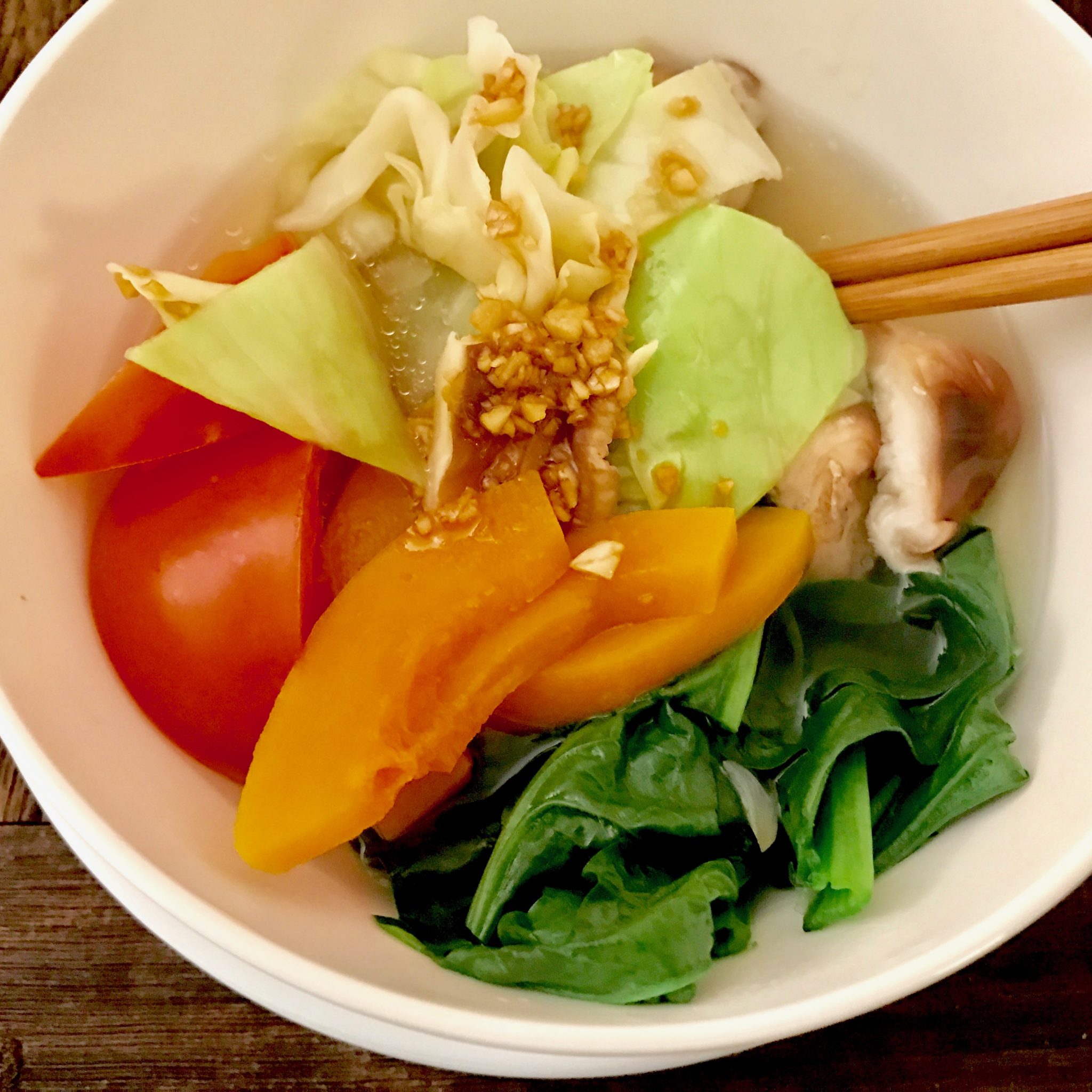
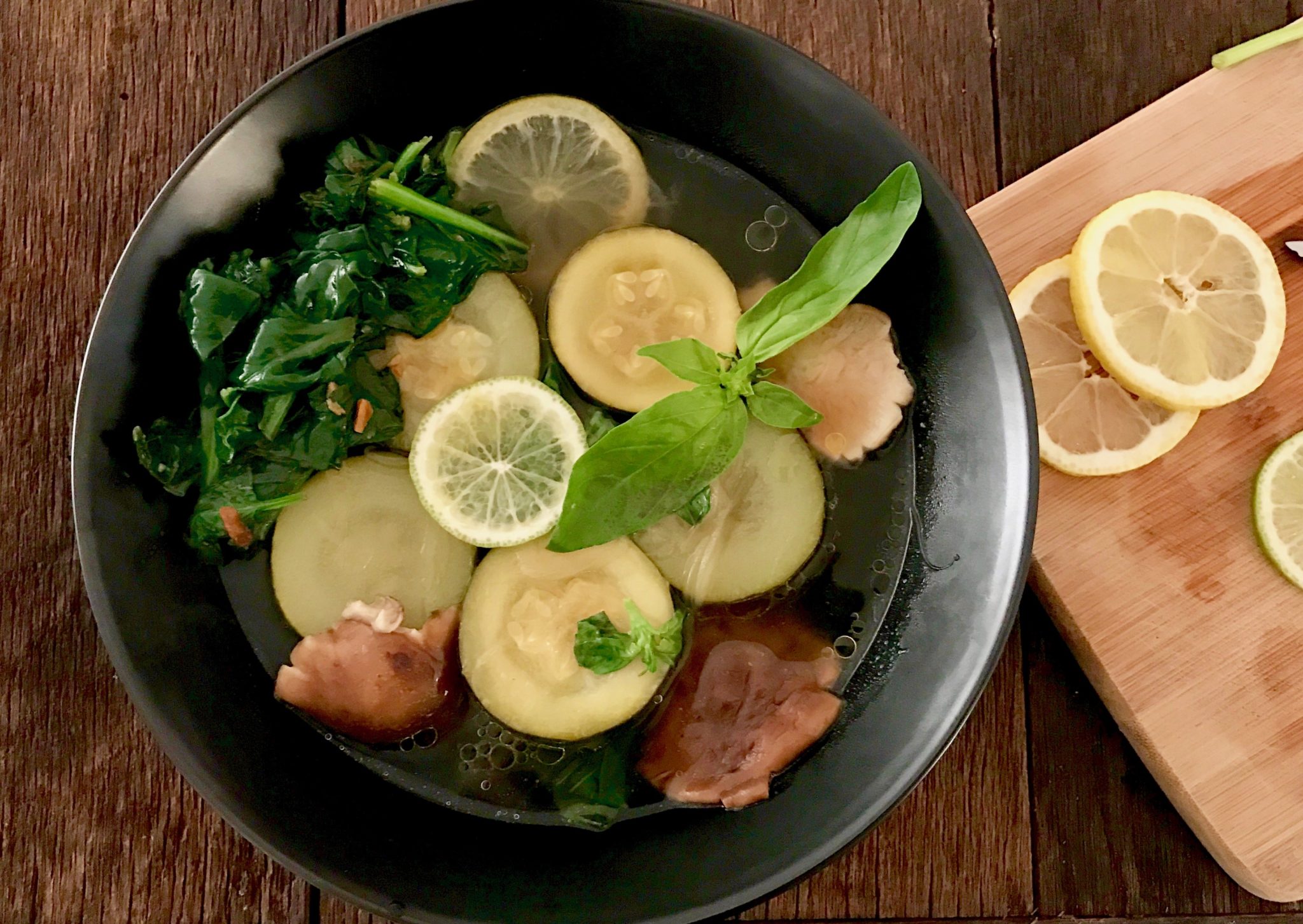
Lemon & Lime Soup is the best way to eat lemon and lime rinds that are loaded with health benefits, that most of us are not aware of. It’s a very fresh, tangy, aromatic, and most of all healthy soup!

In Thailand, the land known for its delicious and healthy foods, I grew up eating a soup dish called chicken & pickled lime soup, or in Thai “Gai Toon Manao Dong.” That was a long time ago when I was still a meat eater.

In the soup, they use whole, pickled limes, chicken, Thai winter squash, and shiitake mushrooms along with other spices. Then, they slow cook it ‘til everything is soft, and well-blended with incredibly aromatic smells. Even though the taste is quite bitter, it’s very delicious in a unique way.

It’s known to be one of the best healing soups when you are sick. Most Thai people believe that bitter food is good for you, and we have a saying to makes us feel good when eating something bitter: “bitter is medicinal.”…
Read More

enjoy it a little bit at a time often

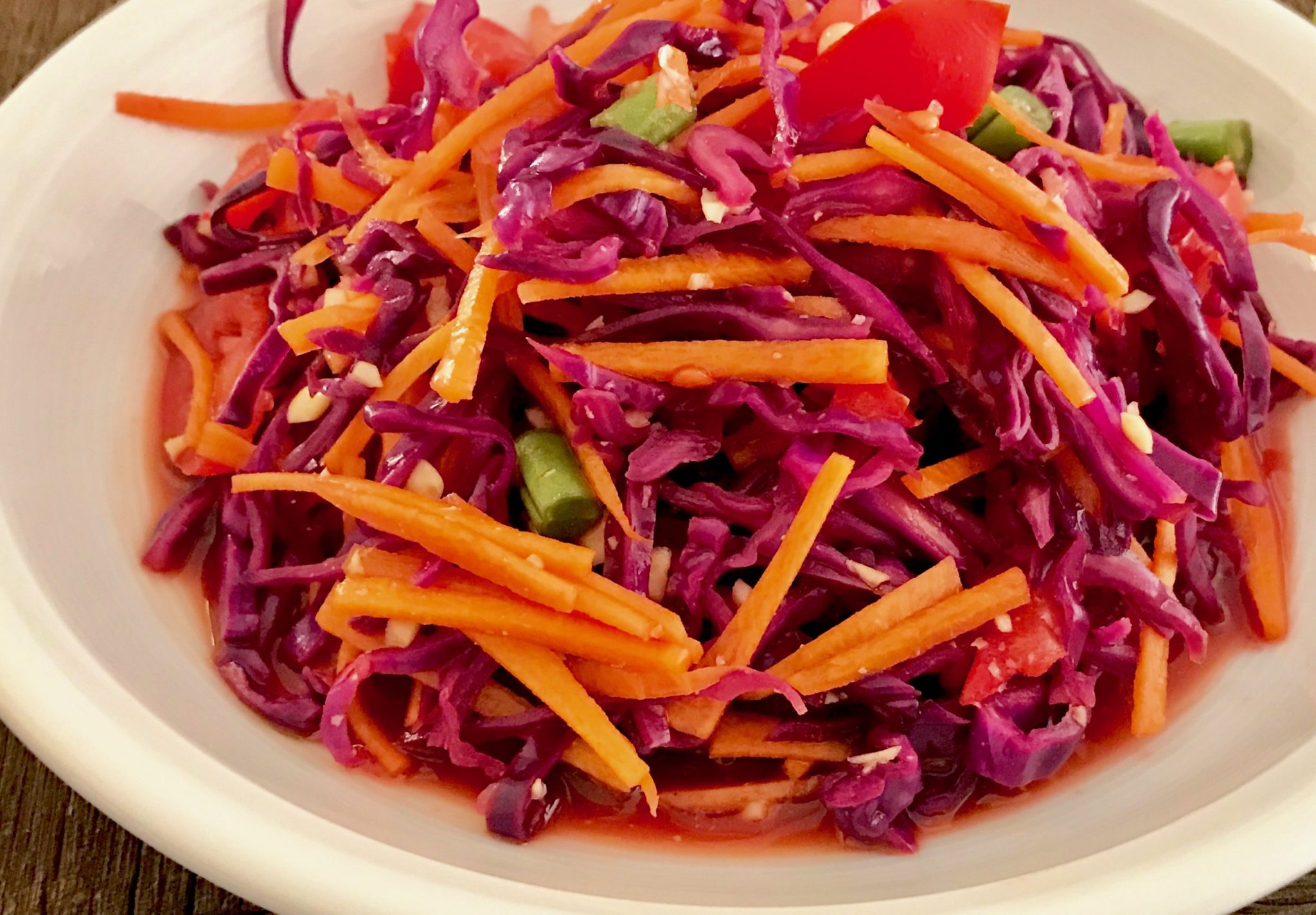
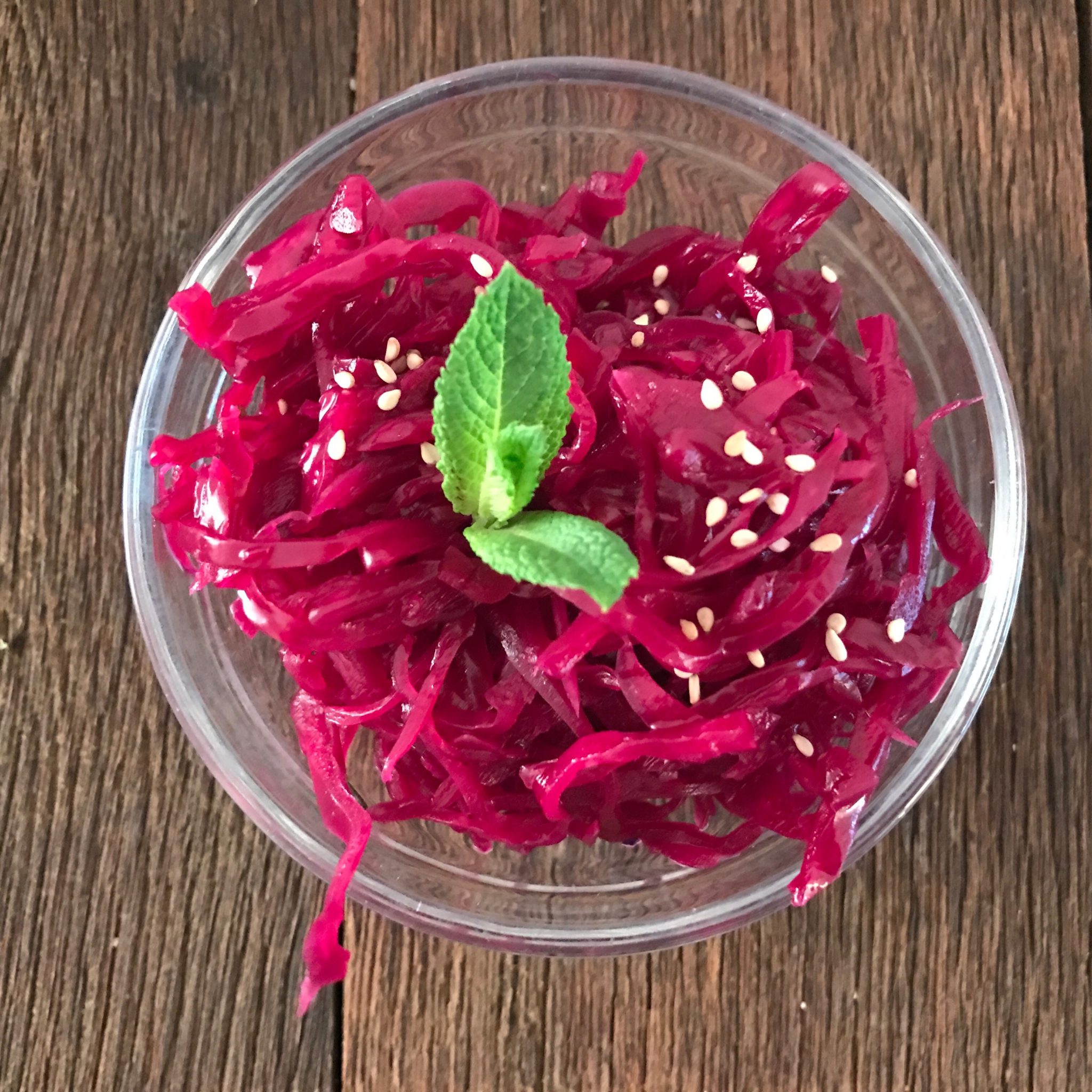
Red Cabbage Sauerkraut is the prettiest homemade probiotic I know. It contains loads of good bacteria known to be great for your gut–right from your own kitchen!

Here is a link about the benefits of eating sauerkraut that I think you might enjoy reading.

I make sauerkraut a lot, and like to keep it on hand in the fridge. It’s simple to prepare, with only cabbage and salt. However, making Red Cabbage Sauerkraut, I add water to give it some extra brine as red cabbage is a bit tougher and doesn’t make enough liquid on its own. It always comes out great.…

Read More

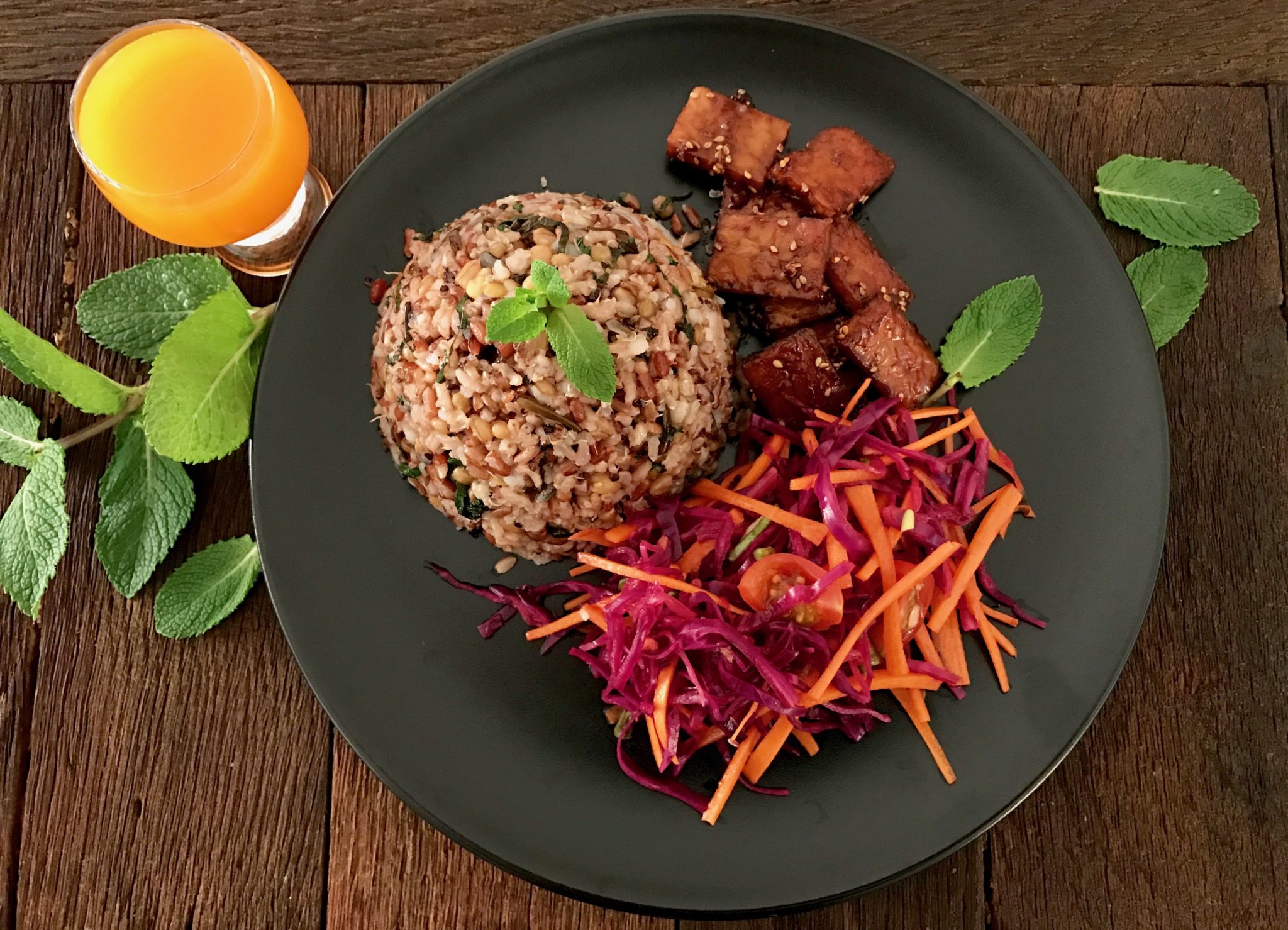
enjoy it with somtam and teriyaki tempeh!

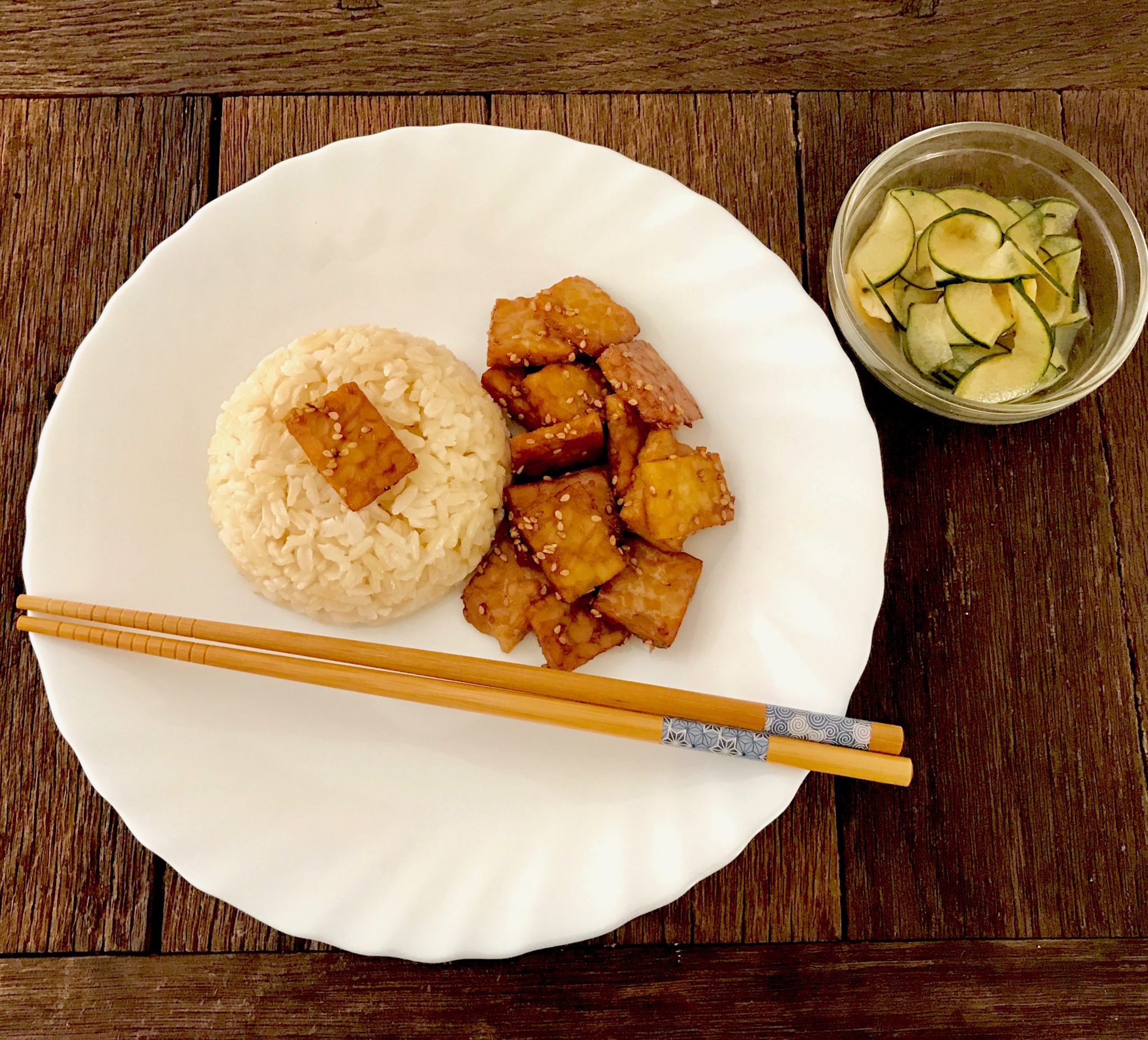
Coconut Rice with Somtam (Thai Papaya Salad) and Teriyaki Tempeh is the best combination of aromatic, savory, tangy and sweet.

I remember that we were all so happy, when my mother made this Coconut Rice as a special treat for us. It’s especially tasty when she made it with Thai Jasmine white rice.

One day, when I was heating my leftover cooked rice,  I used a little bit of coconut oil, fried the rice, and sprinkled a pinch of himalayan salt in. It turned out so good, and reminded me of my mother’s coconut rice–only easier and faster to make.

Ever since, I make this Coconut Rice dish very often, and have created new meals using it with som-tam and Teriyaki Tempeh. They go together incredibly well. To make it even more aromatic, I add a few leaves of mint in–imagine that!…

Read More

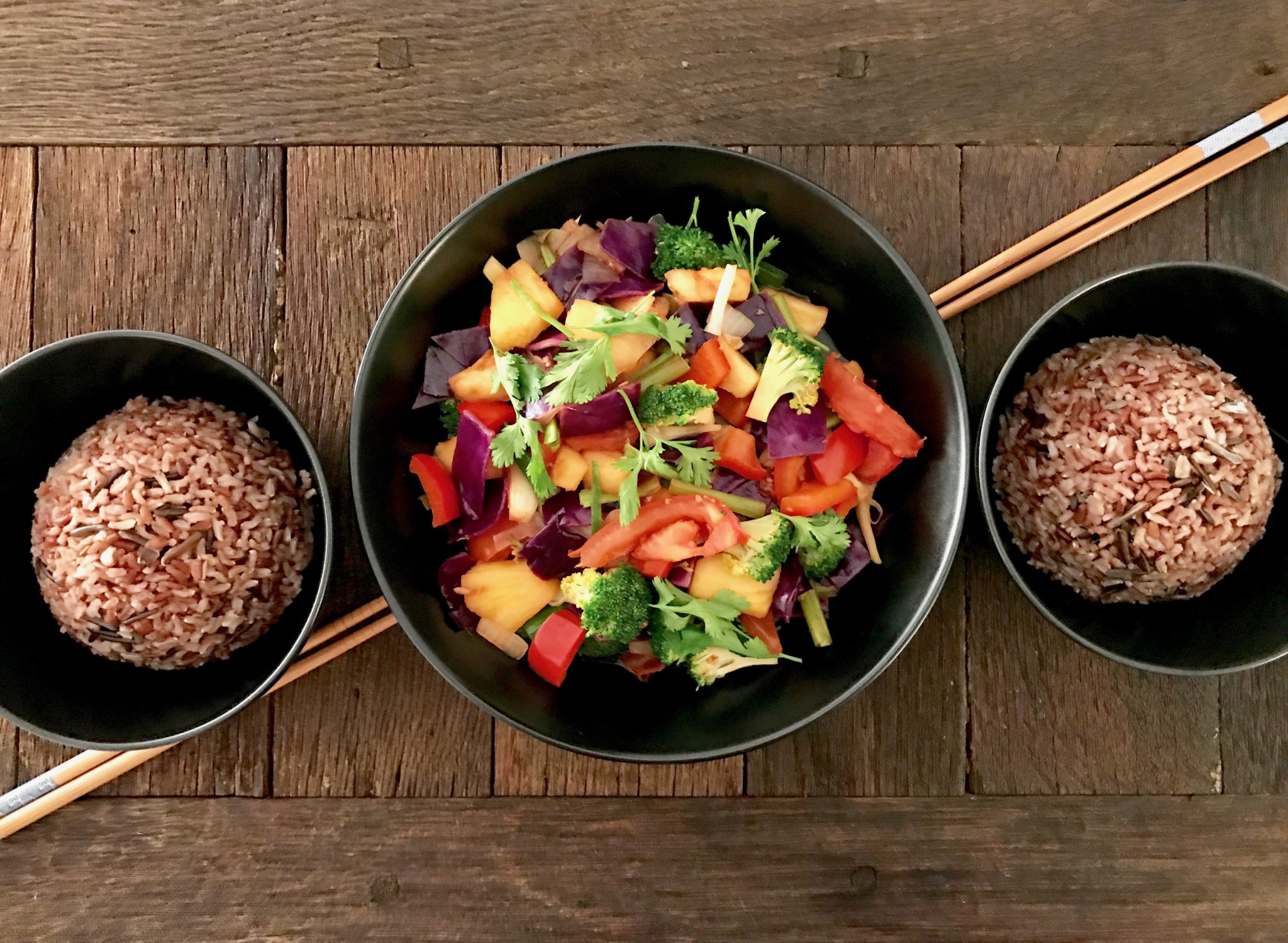
enjoy it with a bowl of rice, or even better with fermented whole rice!

Vegan Sweet and Sour Vegetables are always the first choice when we order Chinese takeout as we are sure to get a generous amount of vegetables to enjoy with a bowl of warm rice.

Being Thai, I love Thai flavors better, although sometimes we don’t have many choices. The best Sweet and Sour we love is the one I make at home (of course!) It has all fresh vegetables, mixed with a few simple ingredients, and we simply enjoy this healthy dish.

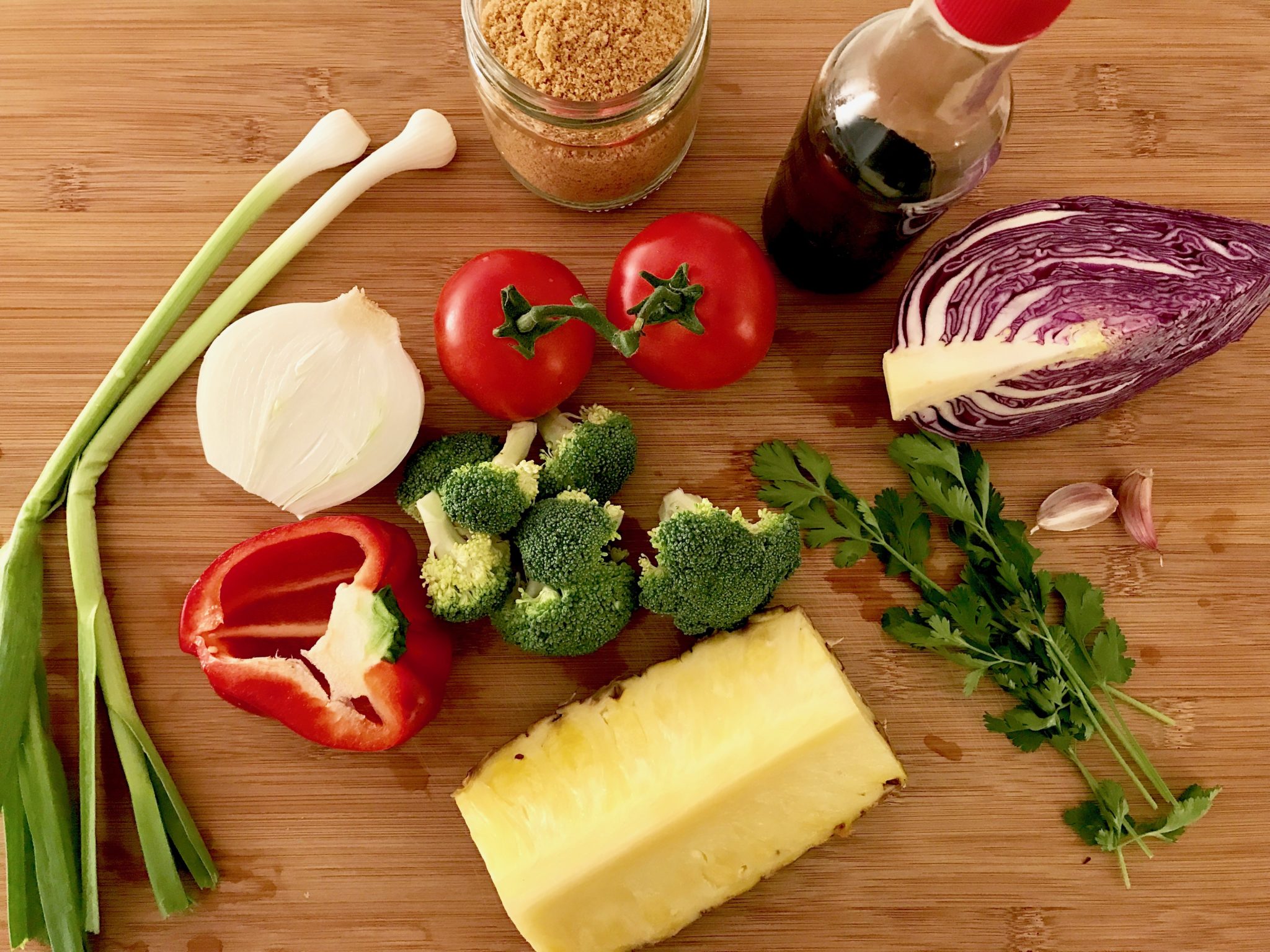
Things you need to make Vegan Sweet and Sour Vegetables:

  1. A plate of vegetables of your choice. I use a few florets of broccoli, 2 tomatoes,  a little bit of red cabbage, red bell pepper, half an onion, 2 stems of green onion, a ¼ of a pineapple, and a few stems of cilantro.
  2. 2 cloves of garlic.
  3. 2 TBSP (30 ml) of soy sauce, and 2 TBSP (30 ml) of water.
  4. 1 TBSP (15 ml) of coconut oil.
  5. About 2 TSP (5ml) of sugar. I use whole, unrefined sugar.

    ingredients for vegan sweet and sour vegetables

    ingredients for vegan sweet and sour vegetables

…

Read More

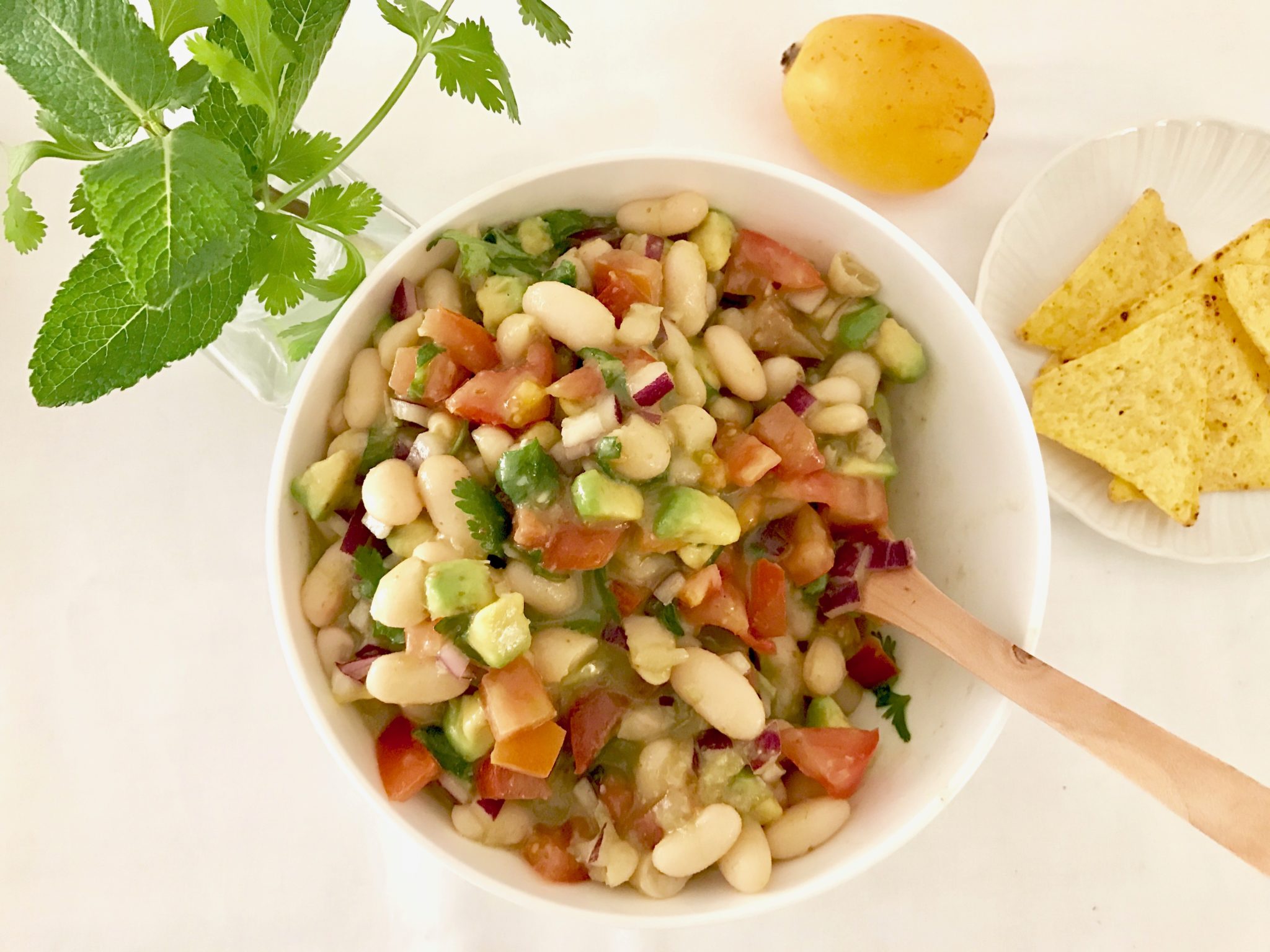
Fermented Bean Salsa ideas always come to mind when I want to make a quick and easy, yet healthy appetizer. It’s so good for when we crave Mexican-American type foods, and also great for entertaining guests before meals, or simply for taking to picnics and potlucks!

Why fermented beans you may wonder? In case you are not familiar with fermented beans, let me pass on some info I have learned in the past few years. All beans and legumes contain anti-nutrients that make it hard for our bodies to digest them. Fermenting and sprouting before consuming them are the best way to to reduce the anti-nutrients, and to make the beans more digestible, thus causing less gas.

Other benefits you get from cooking your own beans are staying away from the BPA in can linings, and helping to reduce container use.

If you want to know more reasons why I ferment beans (and whole grains) check out my post about why I ferment whole grains. 

However, the process of fermenting and sprouting requires some time, and is probably the reason why most people and canned bean companies don’t do it. So, the best way is to do it by yourself. I found it’s hard at the beginning, but not once I got used to it. With some planning, I always have fermented beans on hand….

Read More

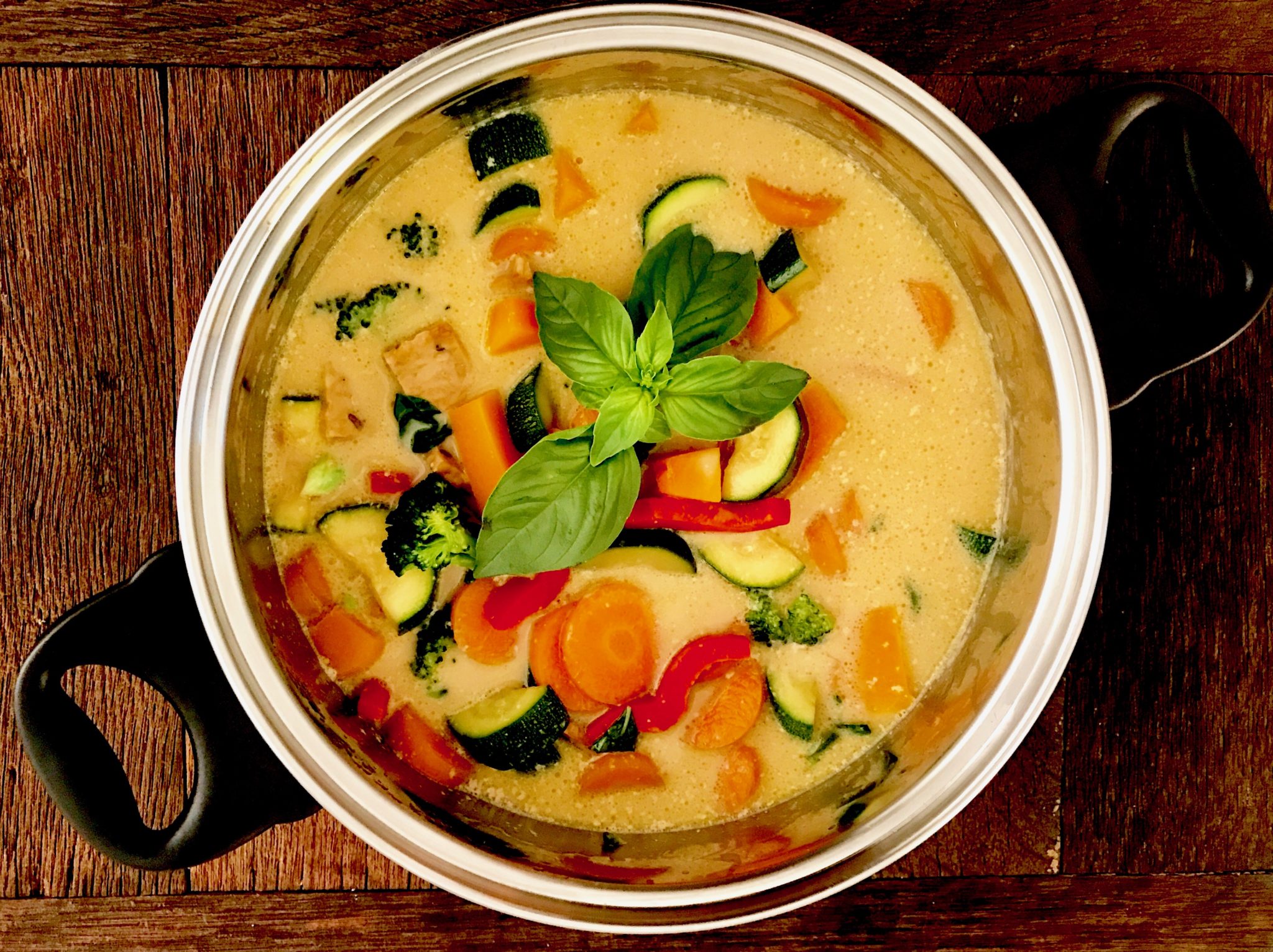
thai green curry tempeh--gourmetvegetariankitchen.com

Thai green curry is one of the most desired curries. It’s a great mix of balanced flavor with spicy, savory, sweet, and aromatic, all with the taste of different vegetables in a creamy coconut-based soup. When I want to eat something filling and flavorful, Thai green curry is high on my list.

Growing up in Thailand, green curry was one of many tasty Thai dishes I often chose. However, most green curry in Thailand is made with either beef or chicken. When I decided to stop eating meat altogether, I started to substitute either tofu, tempeh or sometimes just plain vegetables!

Talking about cooking curry dishes can be intimidating–for me too.  With curry paste on hand it is very simple though. Making curry paste from scratch is much more difficult, but fortunately there are so many companies selling ready-to-use curry pastes, and some with very healthy ingredients. However, most of them use shrimp paste. So, make sure to read the ingredients carefully. There is one company I usually buy my curry paste from without shrimp paste (not affiliated with GVK).

As long as you have the right curry paste on hand, you can get the Thai green curry done in no time. Are you ready to make it with me?…

Read More

season it with the sauce the way you like and enjoy

Hot Pots are one of the easiest and healthiest dishes in Asian cuisine. There are so many different kinds of Hot Pots in restaurants to choose from: Japanese shabu-shabu, Sukiyaki, and Taiwanese style. These meals are a fun way to eat with a big group of friends and family.

The ingredients of Hot Pots are mainly soup stock, protein from meat or plants, and vegetables. As each individual chooses what to put into theirs, both vegetarian and non-vegetarian friends can eat together as each Hot Pot can be fixed differently.

Eating and having fun conversation, sometimes we can easily stuff ourselves. The good thing about overstuffing ourselves eating Hot Pots though is we don’t feel bad afterwards as most of what we eat are vegetables and soup broth.

However, eating Hot Pots at home can be intimidating if you don’t have all the equipment and ingredients to make the sauce the same way they do in restaurants. I don’t have the equipment, and I can’t find an similar healthy replacement for the sauce. So, I have come up with an easier and more practical way to eat it home. It’s also fun, healthy, and tasty.

Whenever I feel like eating a light, but warm and easy dinner with a lot of vegetables, I make Hot Pots. The first few times of trying to make it at home, I followed every step I learned–even preparing soup stock first. However, I realized that the soup stock is not really necessary. The way we eat Hot Pots is to cook everything including vegetables in boiling water, and the water automatically turns into stock, so we get the stock in an easier way….

Read More

Teriyaki Tempeh

Teriyaki sauce is famous for making everything taste great, and tempeh is exceedingly healthy. Combining them, we have a healthy and delicious Teriyaki Tempeh!

I love Korean food, and in my opinion, it’s one of the healthiest types of foods in the world. Unfortunately, most restaurants only offer teriyaki with meat. As a vegetarian, I have created my own way of eating meat-free teriyaki.

I have made it with both tofu and tempeh before, but I like how the tempeh turns out better. However, tempeh can be a little hard to make taste good if you don’t cook it right, and I’ve learned it tastes better when fully cooked. If more people knew how good Teriyaki Tempeh could taste, I’m sure it would be much more popular.

In my teriyaki sauce recipe, I have cut some ingredients from the original recipes as not all of them are available in some areas. It’s much simpler to make this way, but it still tastes delicious.

Would you like to give tempeh a chance? Let’s make Teriyaki Tempeh together!…

Read More

Som Tam is a well known Thai salad made with raw papayas pounded in a terra cotta mortar–a unique way to make salad. It’s very healthy with a combination of sweet, tangy, savory and spicy flavors. In Thailand, Som Tam is everywhere from street venders to high-end restaurants and food courts. If you like Thai foods, I’m sure you will like or have already tried Som Tam before!

My family and I love eating Som Tam, and we can eat it almost every day, which we often do when we go to Thailand. However, it can be hard to make Som Tam the same way they do in Thailand if you can’t get raw papayas, or don’t have a terra cotta mortar. Where I live in the US, it’s easy to get everything I need to make Som Tam and other asian dishes. When I travel though, especially now in Spain, I can’t get raw papayas, and don’t have a mortar either.

To make Som Tum like we always do, I substitute carrots & cabbages for raw papayas. Sometimes, I add cucumbers too. These vegetables are more common and easy to find everywhere. For a mortar, I just use a regular salad bowl instead. The result is not exactly the same, but it’s healthy, and tasty in a different way.

Before we talk more about making Som Tam with cabbage, I would like to mention something about it first. Even though I grew up hearing that eating raw cabbage is not good for you, I never found out why. Instead, I avoided consuming it raw altogether.

However, a few years ago, I decided to look into the reasons. I read a few articles and found out that cruciferous vegetables such as cabbage should be cooked before being eaten as they contain chemicals that block the production of thyroid hormone in your body. Here is the link to the article I am talking about. You can use your own intuition whether to consume it raw. I still think eating it raw in moderation is ok, and I like it that way sometimes….

Read More

Vegan Miang Kham

Miang Kham

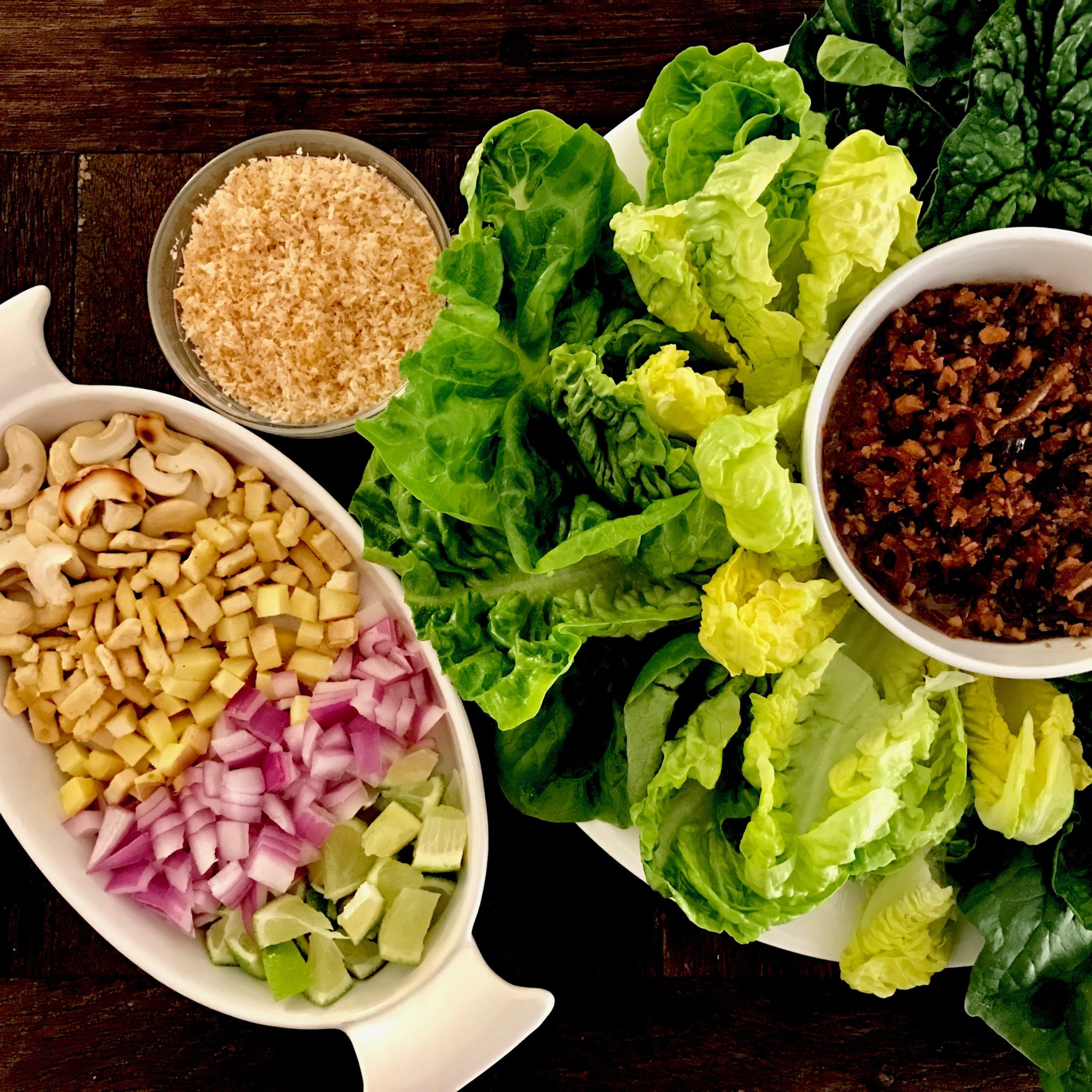
The Thai appetizer, Miang Kham, is one of the healthiest snacks. It’s a perfect mix of savory, sweet, and tangy, along with healthy raw vegetables. It’s actually an appetizer, but we often eat it for dinner!  

However, the original Minag Kham recipe from Thailand has fish sauce, shrimp paste, and dried shrimp, all of which we don’t eat. It also requires a lot of palm sugar to make the sauce thick, but I find it too sweet, and substitute a lesser amount of regular, unrefined cane sugar, that is always easy to find. To thicken the sauce, I use shallots or red onions with toasted coconut flakes, and minced crispy tofu instead. I substitute soy sauce for the fish sauce, and replace the shrimp paste with nutritional yeast. It turns out just the way I like, and I enjoy the flavor very much. It actually tastes as great as the authentic dish, but it feels even healthier and is easier to make!…

Read More

Living in a different country can be a challenge as far as having everything we are used to–especially kitchen equipment. We could just buy what we want, but it’s better to go without a few things and find ways to improvise.

I regret letting a year go by without trying to accept that and live without an oven, when we spent our year in Taiwan in 2013-14. Most Asian kitchen don’t have ovens, so I went the whole year avoiding cooking anything involving an oven.

This year in Spain, it’s disappointing that our house doesn’t have an oven again. However, I tried harder and figured out how to keep having our favorite healthy snacks like kale chips in the kitchen. It was a big success, and I gained confidence experimenting with new techniques.

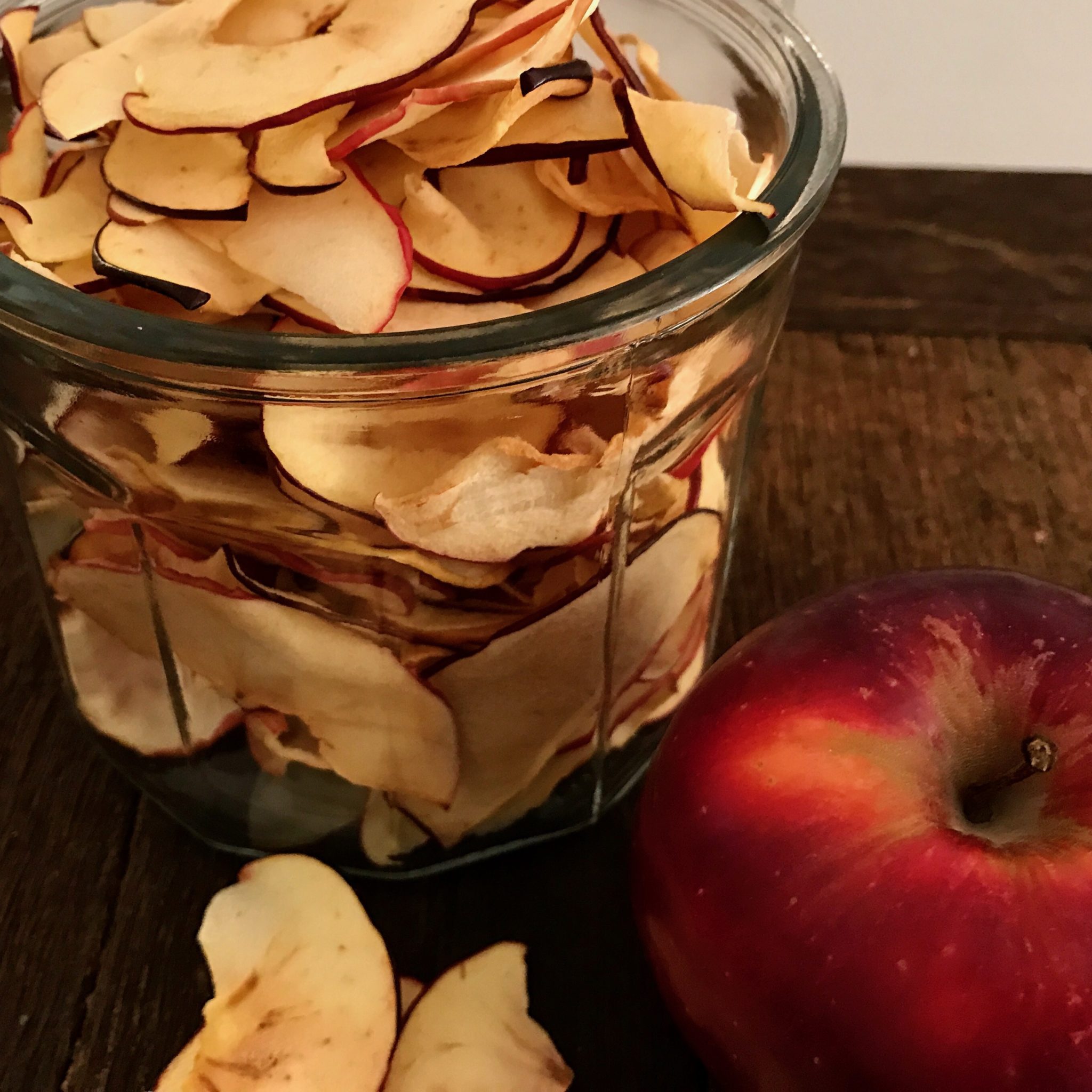
I’m obsessed with making dried apples (apple chips) and I have turned so many adults and kids onto them too. I have given away jars and jars to friends as birthday and Christmas gifts, or for my daughter’s school parties, etc. It’s so rewarding to see kids pick the dried apples over other sweet treats!…

Read More

vegetable stock

I still remember the first time I tried to make soup by following a recipe. I ended up putting my project away and cooked a different dish entirely because I didn’t have either stock or broth on hand. I was so afraid to cook anything if I didn’t have all the ingredients mentioned in the recipes, and most soup recipes required either stock or broth, so my soup dishes were on hold for a while.

To be honest, I was a little confused about stock and broth. I didn’t know the difference between them, and I’m sure I’m not the only one. My desire to make beautiful soup like I saw in cookbooks kept coming back to me, so I decided to really look into the stock and broth terminology.

Here is what I found out:

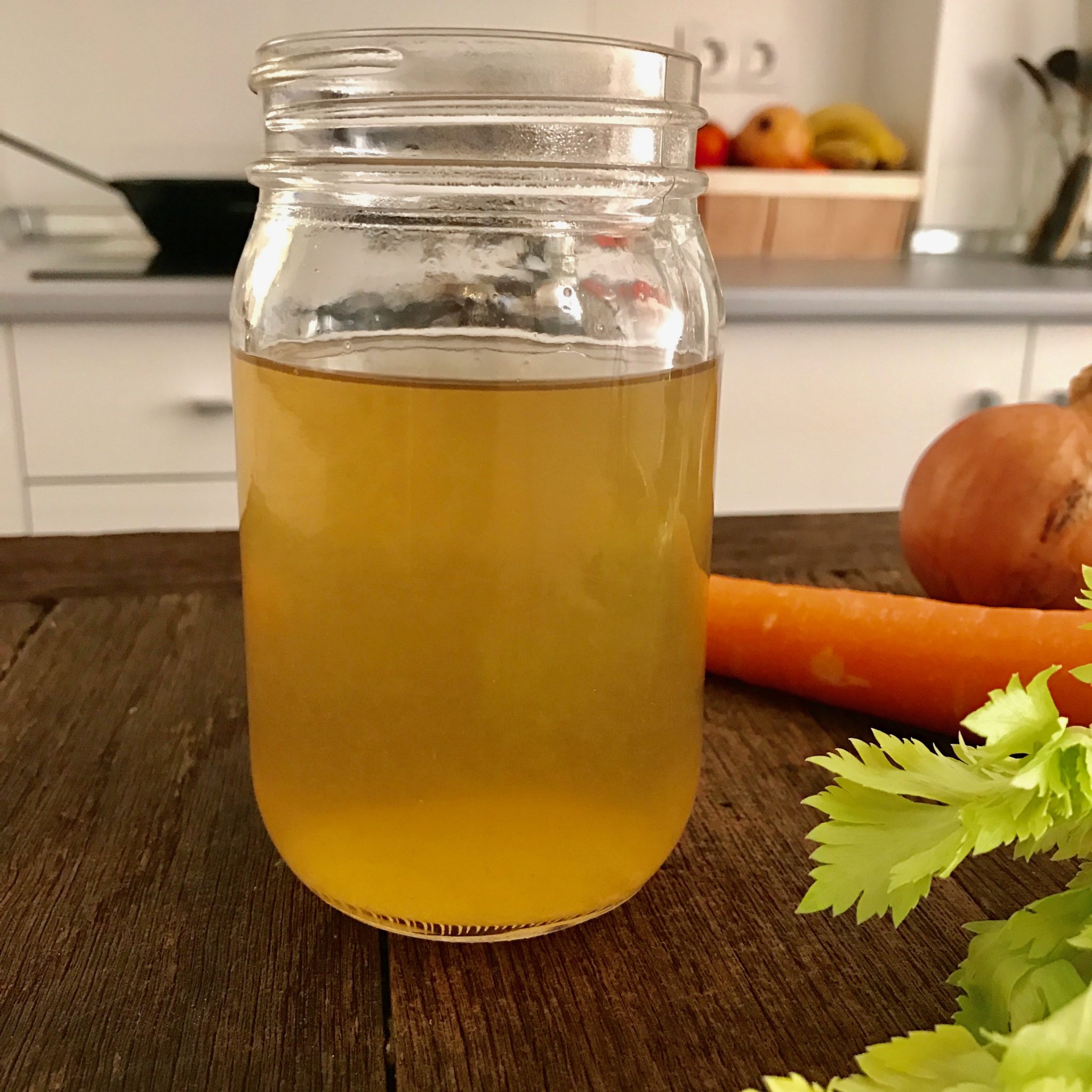
To make vegetable stock, prepare the main ingredients, which are vegetables. Slow cook them in water until everything is cooked thoroughly, then remove the vegetables. The liquid that is left after removing the vegetables is called “stock.” The stock is plain, but highly nutritious.

Broth is cooked the same, but we don’t remove the vegetables when it’s done. We do add some seasoning such as salt and pepper or other spices. The seasoned, cooked vegetables with the liquid is called “broth.” We can drink the liquid, and also eat the vegetables at the same time. Broth is also very nutritious.

When I finally understood the difference between stock and broth, I started to make my own. I like making broth as I feel a little bit silly throwing away the cooked vegetables afterwards. Although, I do separate and save some liquid once in awhile if I plan to make some dishes that require stock….

Read More

  • « Go to Previous Page
  • Page 1
  • Page 2
  • Page 3
  • Page 4
  • Page 5
  • Go to Next Page »

Primary Sidebar

I’m so glad to meet you!
Sawatdee Ka, my name is Jeem Elliott and I’m Thai. I'm the creator of Gourmet Vegetarian Kitchen.Com. I have a background in Read More…

  • Instagram
  • YouTube

Latest Video

Search Gourmet Vegetarian Kitchen

Categories

Recent Posts

  • Vegan Hard Cheese (Cheddar and Parmesan Styles) 
  • Vegan Basil Pesto
  • Pineapple Vinegar
  • Vegan Oatmeal Sourdough Pancakes
  • Chickpea Yogurt & Cultured Tofu

Footer

I’m so glad to meet you!
Sawatdee Ka, my name is Jeem Elliott and I’m Thai. I'm the creator of Gourmet Vegetarian Kitchen.Com. I have a background in Read More…

Archives

  • Facebook
  • Instagram
  • YouTube
Back

About Gourmet Vegetarian Kitchen

In this site you can learn simple ways to cook healthy-plant based meals. I create this site for you to cook following easy-practical recipes and methods in your own kitchens. If you want to start cooking healthy–you are at the right place. Gourmet Vegetarian Kitchen welcomes you all.

Copyright © 2026 · gourmetvegetariankitchen.com